Media Magnates Converge on Ambon
By Yanto Soegiarto*

COMBATING fake news and staying relevant to readers were some of the key issues discussed at the National Press Day.
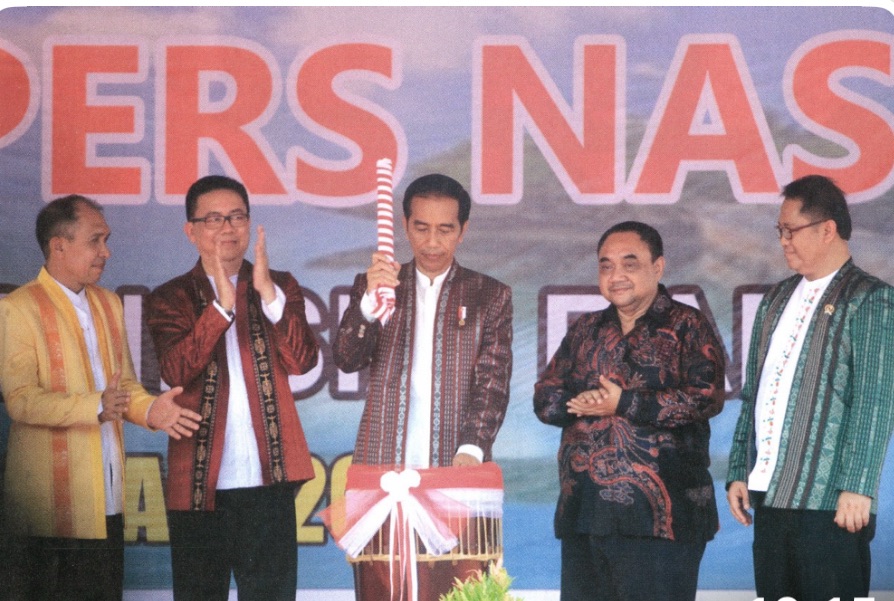
Media magnates converged on the city of Ambon in February to celebrate National Press Day 2017, among them James Riady, Hary Tanoesoedbjo, Chairul Tanjung, Surya Paloh and Anindya Bakrie.
And naturally, thousands of journalists representing the nation’s press from all over the archipelago flocked to the annual gathering, which featured a series of activities ranging from social services, a marathon, press exhibitions, seminars, award presentation ceremonies and an appearance by President Joko Widodo.
At least 14 governors, cabinet ministers, foreign diplomats, representatives of ASEAN journalist associations, military and police commanders also came to Ambon.
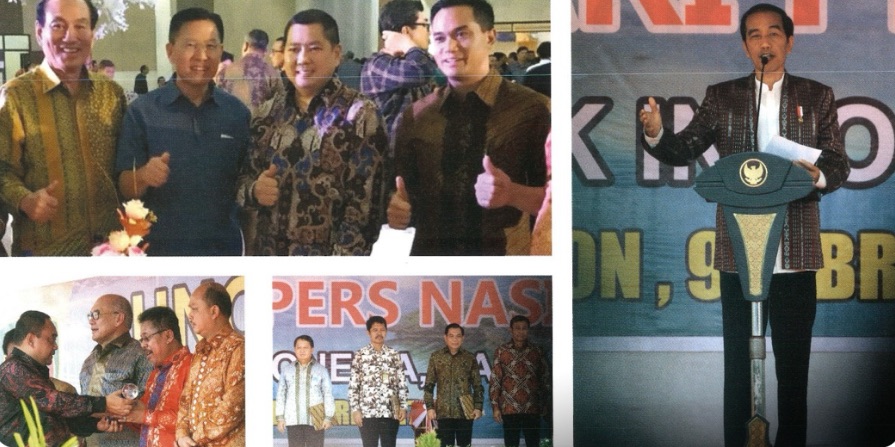
Leading the National Press Day agenda were, among others, discussions on progress in upgrading the competence of journalists, verification of media companies, digitalizing the media industry and seeking consensus to combat hoaxes.
President Jokowi delivered a keynote address calling on the mainstream media to combat fake news and hoaxes on social media, which have become a means of eroding unity and diversity, misleading the public about the progress of development programs.
“Social media is beginning to create headaches for the government. This a reality and we must cope with it wisely. Everyone is now active on social media and tweets including ministers and the president. The mainstream media has a role to straighten out news that comes from social media,” he said.
During one of a series of events, the media tycoons had the opportunity to express their views on the development of the press. James Riady of the Lippo Group, which controls BeritaSatu Media Holdings, said the press community in Indonesia needs to raise its game in this changing world, where a slow-growth environment, unemployment and inequality remain the biggest challenges.
Journalists, he said, should shoulder the responsibility to push for reform while at the same time providing accurate and objective information to the public. James pointed out that the world economy continues to underperform, representing a real challenge for everyone in the near term. “The press has to present and educate the public about what challenges lie ahead and how to address those challenges,” he said, highlighting uncertainties over economic growth all over the world, including in Europe and Japan.
Growth has not been able to suppress rising unemployment in the developed regions, while another engine of the world’s growth, China, is also experiencing slower growth after years of acceleration.
Amid all the uncertainties, people tend to believe in promises for changes from their leaders, a factor that may have led to the rise of US President Donald Trump, despite his controversial protectionist stance, the businessman said.
The slow growth in the world economy is also reflected in Indonesia, where growth hovered at a low 5% last year. At the same time, the country is facing the danger of rising intolerance and James called on the Indonesian press community to be an information gatekeeper for the public. The media should present news, analyses and opinion that is balanced, accurate and responsible, he stressed.
Media Trends
Hary Tanoesoedibjo, the owner of the diversified media group MNC, spoke about trends in the media industry during a mass media national convention, noting that all companies across the world are now connected to the internet and have gone digital.
“In Indonesia, 51% of the population use the internet and 40% are already active on social media. Now people watch, listen, and read information using applications connected to the internet. Not just that but also chatting and doing transactions,” he said.
Hary also discussed current media trends that might impact the print media and protection of the national media against foreign interests. “China is an example of how a country protects its national media. This is why Baidu and Ali Baba can prosper,” he said.
He also delivered a lecture to students in Ambon themed “Entrepreneurship and Economic Development” after which he gave scholarships to ten outstanding students. “Currently the Indonesian economy is lagging behind and one way to change that condition is by promoting entrepreneurship,” he said.
During a gala dinner and awards presentation to pioneers of the media and to welcome the media community, businessman and Indonesian Ambassador to Poland Peter F. Gontha spoke about his experience in pioneering private television in Indonesia.
Anindya Bakrie, who controls Viva News, TV One and ANTV, also went on stage and delivered a short message along with many other media leaders, including those from Kompas, Tempo, Check and Suara Surabaya radio.
*About Yanto Soegiarto:
Alumnus of “Merdeka” Jalan Sangaji no. 11 Jakarta, the battle training ground for journalists. Educated abroad and trained in the US. Editorial writer on various local and international issues. Has covered many countries, including Vietnam, the former Soviet Republics, the Middle East and North Korea. Staunch advocate of freedom of expression and press freedom. Former Editor-in-chief of the Indonesian Observer newspaper, Head of Content of astaga.com, News Director of RCTI, Research Fellow at Soegeng Sarjadi Syndicate. Manging Editor at GlobeAsia Magazine, BeritaSatu Media and BBS TV Surabaya
 Catatan Forum Senja