By: Yanto Soegiarto*
Nostradamus: “The years 2007 through 2012 will be the Time of Troubles full of war, despair, and evil”
Lebanon is famous for its wineries, luxuries like pistachio madeleines, wild cherries, and olive oil. By the mid 1960sBeirut had become a modern international city and it flourished as a center for trade, tourism, culture and education. Often dubbed the “Paris of the Middle East”, late model taxis wandered the streets of the Lebanese capital, taking visitors around the enchanting and fashionable city.
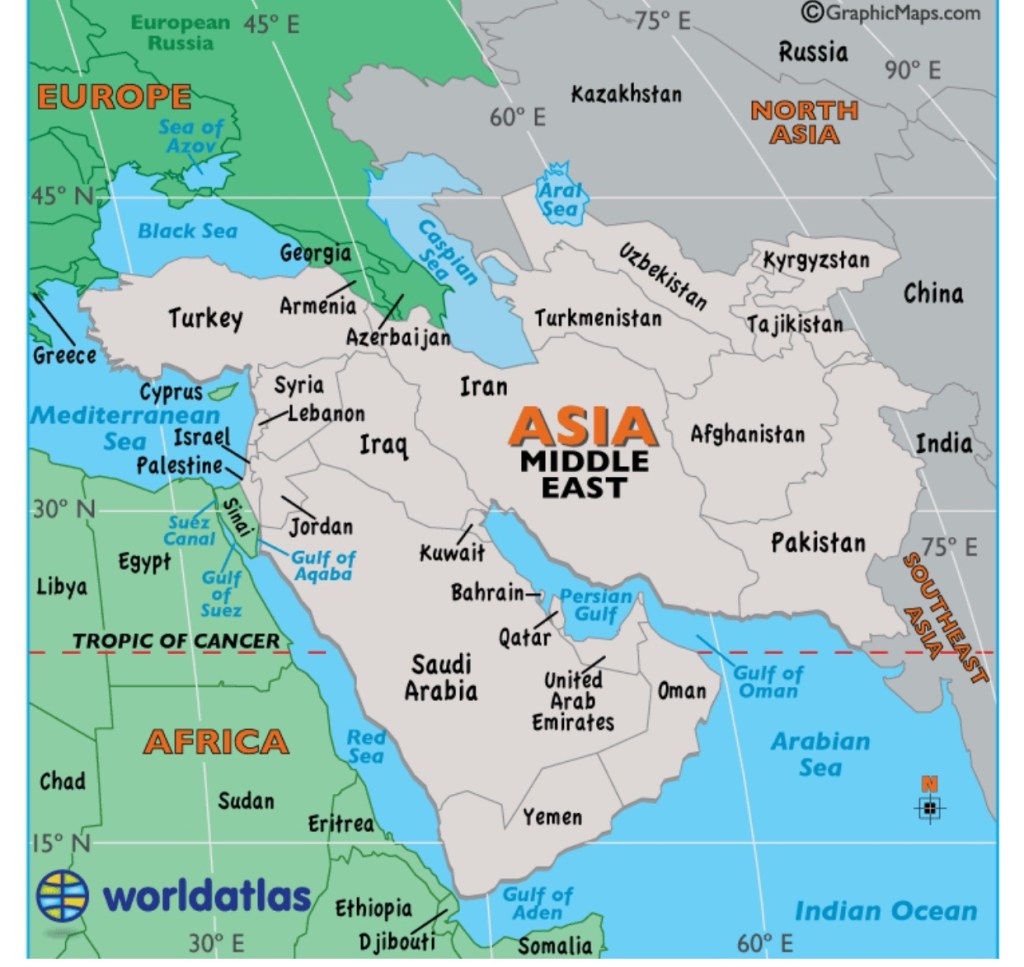
Overlooking the Mediterranean seafront stood the majestic St George hotel, while in the distance was the famous American University where students from around the region received a modern education. Culturally, Lebanon has enjoyed close ties with France, other European nations, and even the United States. Now Lebanon is in flames.
Weeks of continued Israeli bombings have flattened parts of the country. Now the Israelis are focused on the northeastern Bekaa Valley and the ancient city of Baalbek, Hezbollah symbols of power. Yet it makes no sense for Israel to destroy the civil infrastructure in response to the kidnapping of its soldiers while at the same trying to hold the country accountable for the actions of groups and militias it cannot reasonably control. And despite its mighty war and propaganda machine, such reasoning will not put Israel on the side of the angels.
It is true that the Hezbollah rocketing of Israeli cities also breaks international law, but no more so than the bombs from Israeli jets eviscerating families in the apartments of Beirut. The devastation is unparalleled. The recent bombings of Qana, which killed 60 civilians including women and children, is a replay of the massacre in 1996 when the Israeli military hammered a United Nations (UN) peacekeepers’ base, where more than 800 Lebanese civilians had taken shelter, killing 106 people. The two incidents were no accident.
The merciless killings of civilians in Gaza and Lebanon, the extensive annihilation of residential areas, apartments, buildings, utilities, roads, and the bombardment of UN posts, are reckless military undertakings that have made the people of the world draw parallels between the Israeli military and terrorists.
Who created the Hezbollah? Eighteen years of Israeli occupation and crimes against the Palestinian people did. The Hezbollah are justified in their desire for their own homeland, particularly in reaction to Israeli aggression. Nevertheless Israeli supremacy prevails, with “big brother” United States a cheerleader in this brutal game as the rest of the world stands still, powerless.
The events of the past weeks in Lebanon remind us that the peace and stability of the region, and world security, is at risk. The world is currently not a safe place and this Israeli-American adventure must stop if we are to avoid an upsurge in extremist, and terrorist, activities.
Why did diplomacy fail? Because no one dares, not even the UN, to point finger at the United States. UN Secretary General Kofi Annan could have picked up the phone and told US President George W. Bush to pressure Israel. Or propose the kind of diplomacy that the Europeans and the UN conducted in the late 1980s and the early ’90s that led to the mutual release of prisoners. Or consider the British model by sitting with “terrorists” (the Irish Republican Army) in trying to achieve results through negotiations (it worked!).
The world knows the only diplomacy feasible is first establishing a cease-fire and a mutual prisoner exchange and second at recognizing Hamas in Palestine while establishing talks with Syria and Iran. But the US won’t heed to international calls to do so and make clear to Israel that it cannot support its current military action.
The UN Secretary General must have the guts to tell Mr. Bush to quit former Israeli prime minister Ariel Sharon’s “pastrami and champagne” doctrine, which calls for continued warfare, and to “put first things first”. Resolution 242, for example, which tells Israel to quit the occupied territories, has been waiting for UN action long before Resolution 1559, which calls for disarming Hezbollah. (Don’t worry Kofi Annan won’t be sacked like Boutros-Boutros Ghali). The latest bloodshed in Gaza and Lebanon demonstrates that there will be no end to the violence until Israel agrees to negotiate with the democratically elected-Palestinian Hamas leadership.
As we all know, the UN won’t run against the Bush Doctrine “either you are with us or you are terrorists” because the big beneficiaries of the war are America’s weapons makers – Lockheed Martin, Boeing and Northrop Grumman. They get tens of billions of dollars in Pentagon contracts. All three firms are well placed in the design and production of targeting devices, electronic warfare equipment, long-range strike systems and precision munitions for use in Iraq and Afghanistan, and for sure in Lebanon.
The world can’t appeal to the UN either on the idea of an international force. It has been tried before – and the United Nations Interim Force in Lebanon (UNIFIL) was regularly targeted by the Israelis and ignored by both the Palestinians and Hezbollah (Indonesia should have second thoughts about sending a peacekeeping force) as any force there would have to be prepared to take on Israeli incursions as well as controlling Lebanese militia or it would have no legitimacy. It would likely end up being disarmed by Hezbollah rather than vice versa.
The UN can only act with US support, and that support has to include pressure on Israel and some declared support for international law. Only Mr. Bush can balance that equation by getting on the phone to Israeli Prime Minister Ehud Olmert and telling him to stop. But that’s unlikely too.
If the Israeli-US war adventure continues, even when the Hezbollah is flattened in due time by weapons of mass destruction, Sheik Hassan Nasrallah would still be there to live to encourage the proliferation of other guerilla groups in the region to engage the Israelis at other points on the long and seamless Israeli-Arab border. At the present time, no guerilla groups have surfaced in Jordan, Egypt, and Syria ready to engage the Israelis across the border. This will change, as new groups draw enraged inspiration from the cages of Palestine and the ruins of Lebanon. And if Iran or Syria is attacked, it could be World War III.
Meanwhile, on the local front, Indonesia, which represents more than 200 million people of the world, must persuade the UN to take a more daring role. It should also earn credibility by playing a significant role in the peace process.
When Soeharto was in power, he met with the late Israeli Prime Minister Yitzhak Rabin at the UN’s 50th anniversary in New York. The two discussed various issues including the Palestinian question. At that time, Israel knew Indonesia’s role as the largest Muslim country in the world, meant it could not be left out of any strategic peace negotiations because Indonesia supports the Palestinian cause. This was why Rabin asked whether the time was right for early diplomatic relations. Soeharto told Rabin that it would not be easy and Israel would have to wait, although he did intimate to Rabin that the two countries might engage in early trade relations. But the two agreed on the principle that peace can only be achieved through dialogue. At the very least, this was a breakthrough in diplomacy.
Now Indonesia has excellent relations with Lebanon, Iran and Syria and hosts the Palestinian Authority’s Mission in Jakarta. If only President Susilo Bambang Yudhoyonocould play a leading role as mediator by talking to Iran, Syria and perhaps Israel without being shadowed by the United States. Who knows, Indonesia’s foreign policy stance that peace in the Middle East can only be achieved through dialogue might well be perceived as an honest and sincere gesture on the part of the Muslim world.
* Yanto Soegiarto wrote this article in 2007 which might to a certain extent relevant to the happenings in the Middle East today. The article was published in book The Syndicate Speaks Out authored by Soegeng Sarjadi and Sukardi Rinakit.
 Catatan Forum Senja